FED / CENTRAL BANK
Federal Reserve
Official policy, market expectations and what they mean for USD.
USD currency outlookPolicy snapshot
Last policy decision
28 Oct 2026Our policy assessment
- Policy focus
- Are current interest rates high enough to bring inflation back to 2% while the economy remains strong?
- Key risk
- Strong spending and business investment could keep demand high, making inflation harder to lower.
- What to watch
- The November employment report and October PCE release should show whether inflation remains stubborn even as hiring slows.
The policy debate
Our forward-looking assessment has not yet been published. The official facts and policy tests below remain available.
Evidence and upcoming tests
What changed
Separate evidence available at the last decision from releases since then- Official data · · Released since last decision
Core PCE inflation rose from 3.0% in August to 3.1% in September. The figures were published the day after the Fed's decision.
Policy implication: This information was released after the Fed voted, so it could affect the next debate but cannot explain the earlier decision.
Evidence that matters
Selected readings beyond the two headline indicators above, with their limits explained.
| Indicator | Latest | Previous | Policy implication |
|---|---|---|---|
| Core PCEEx food and energy · year on yearOfficial source | 3.1%Sep 2026 | 3.0%Aug 2026 | Persistent underlying price growth keeps the case for easier policy weak. A single month cannot tell us whether inflation has re-accelerated. |
| Real GDP growthAnnualised real GDP · quarter on quarterOfficial source | 3.4%Q3 2026 | 2.2%Q2 2026 | Faster output growth suggests demand may withstand high rates. The contribution from inventories and trade must be separated from domestic final demand before treating this as inflationary. |
How to read these figures
CPI, HICP and PCE measure consumer-price changes, using different national methods. “Core” or “underlying” measures seek the broader price pattern. GDP measures economic output. “Seasonally adjusted” removes usual seasonal movements. One release rarely establishes a trend; compare the reference periods as well as the values.
Upcoming tests
Consequential official events. Times are shown in UTC only when verified.
- Economic releaseEmployment report (Oct)
Do payrolls, unemployment, wages and revisions collectively show enough cooling to offset inflation concerns?
- Economic releasePCE inflation (Oct)
Is underlying monthly inflation easing across a broad range of services, or do the annual figures conceal renewed pressure?
Related research
Fed holds at 3.75–4.00% Warsh keeps December open, dollar slips
The Fed held interest rates at 3.75–4.00%, as expected. The vote was 10–2, with Lisa Cook and Beth Hammack both favouring another quarter-point hike. That keeps pressure for further tightening alive. It does not settle December.
Image credits
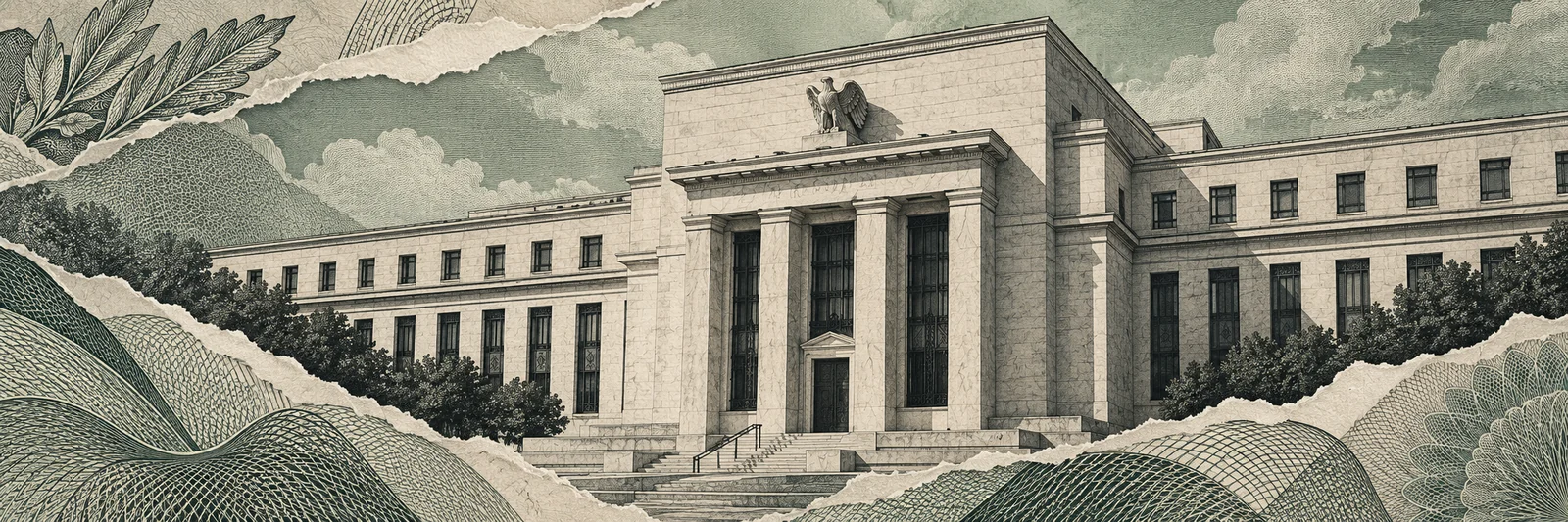
Building: Federal Reserve Board
Kevin Warsh: Federal Reserve Board
Images are cropped, desaturated and faded for presentation; chair photo backgrounds are removed with AI-assisted editing. Where a source uses a share-alike licence, this image treatment is available under the same licence. No affiliation or endorsement is implied.